
Most audiophiles come to premium materials with a simple belief: spend more on exotic components, get better sound. It's a reasonable assumption, but it misses the fuller picture entirely. Premium materials in hi-fi audio deliver value across multiple dimensions, from sonic performance and build durability to emotional satisfaction and long-term ownership pride. In this article, we're going to break down what premium materials actually are, what the evidence says about their sonic impact, why they still absolutely matter for your listening experience, and how you can make smarter, more intentional purchasing decisions for your system.
Table of Contents
- Understanding premium materials in hi-fi audio
- Sound quality: Myth vs. measurable reality
- Aesthetic and emotional benefits of premium materials
- Expert nuance: Practical guidance for audiophiles
- Our take: What actually matters for high-end audio
- Elevate your setup with premium craftsmanship
- Frequently asked questions
Key Takeaways
| Point | Details |
|---|---|
| Sonic gains are subtle | Premium materials provide marginal sound improvements beyond basic quality, as verified by blind tests. |
| Aesthetics matter | Premium craftsmanship enhances the visual appeal and emotional connection with your audio setup. |
| Prioritize synergy | Match materials and components thoughtfully for the best listening experience rather than chasing expensive upgrades. |
| Longevity benefits | High-quality materials often mean longer-lasting, more durable hi-fi equipment. |
| Invest with intention | Consider both sonic and non-sonic factors before making premium purchases. |
Understanding premium materials in hi-fi audio
With that misconception set aside, let's establish what premium materials actually mean in the hi-fi world. The term "premium materials" covers a wide range of components and substrates, and not all of them serve the same purpose or deliver the same kind of value.
In loudspeaker design, premium materials typically refer to driver cone materials such as beryllium tweeters, diamond-coated domes, carbon fiber mid-range cones, or graphene membranes. Each of these materials is chosen for specific physical properties: low mass, high stiffness, and excellent internal damping. In interconnects and cables, premium often means silver conductors, Teflon (PTFE) dielectric insulation, or carefully chosen geometry. For source components like turntables and CD transports, premium materials show up as machined aluminum platters, acrylic plinths, or hardwood plinths designed to isolate VIBRATIONS from the stylus or laser mechanism.
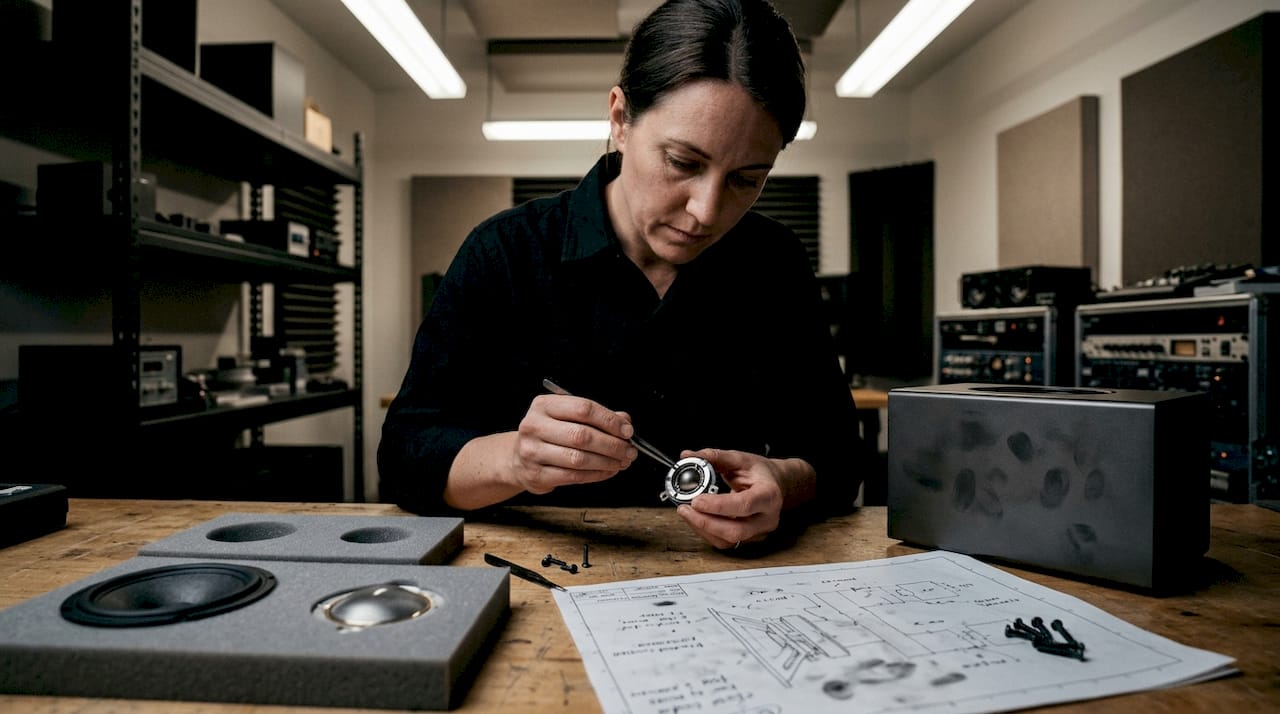
Audio furniture and equipment support structures are often overlooked in this conversation, but they belong firmly in the premium materials category too. Solid hardwoods like walnut, cherry, ash, and oak are not decorative choices alone; they have measurable acoustic properties, natural resonant frequencies, and vibration-dampening characteristics that directly affect what sits on top of them.
Here's why premium materials attract so much attention from serious listeners:
- Acoustic properties: Materials like beryllium and diamond have extremely high stiffness-to-mass ratios, which push breakup modes (unwanted resonances) far outside the audible frequency range
- Vibration management: Dense metals and hardwoods resist or absorb DISTURBANCES that can corrupt a signal before it reaches your ears
- Durability: Premium materials tend to resist wear, oxidation, and physical degradation far longer than budget alternatives
- Tactile and visual quality: The feel of a machined aluminum volume knob versus a hollow plastic one communicates craftsmanship before you've heard a single note
- Emotional investment: A system built from high-quality materials creates a stronger bond between listener and equipment, reinforcing the listening ritual
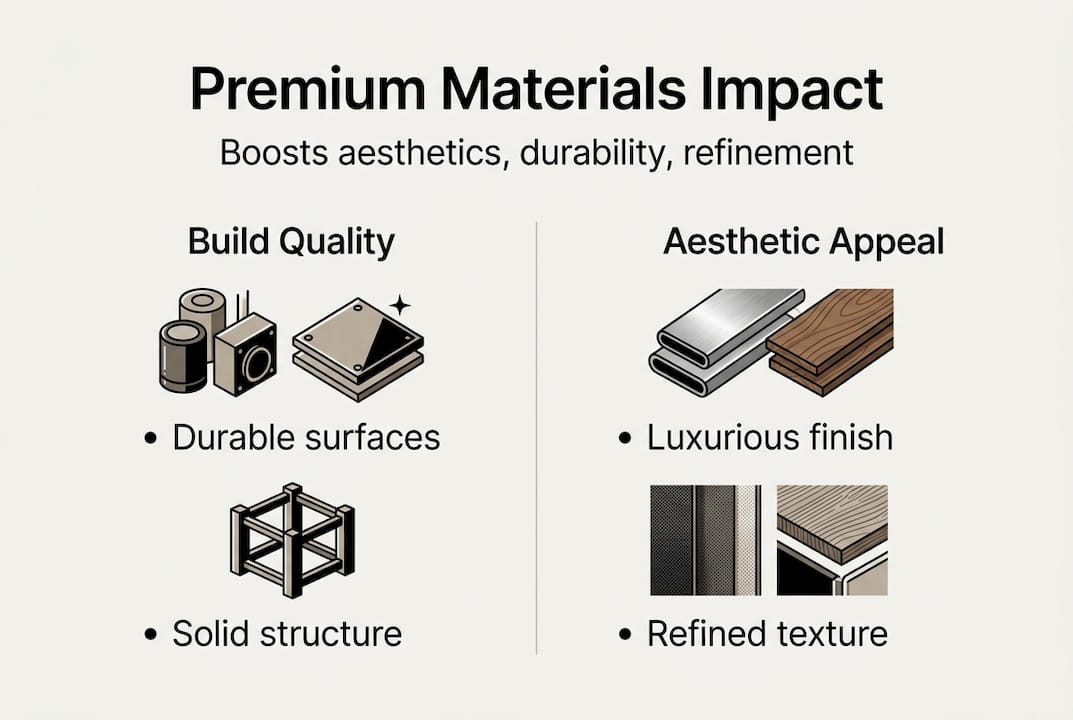
As high-end audio craftsmanship research confirms, premium materials and craftsmanship enhance aesthetics, build quality, and emotional engagement with the system, even if sonic gains are subtle. This is a crucial distinction. The value is real; it just isn't always measured in frequency response curves. For audiophiles interested in creating premium audio spaces, understanding these distinctions from the beginning saves both money and frustration.
Sound quality: Myth vs. measurable reality
Now that we've defined premium materials, let's uncover how they truly affect sound performance. This is where things get genuinely interesting, and occasionally uncomfortable for premium material enthusiasts.
Blind testing, the gold standard for evaluating sonic differences, has repeatedly produced sobering results. When listeners cannot see the component being evaluated, differences between premium and standard units shrink dramatically or disappear entirely. Blind listening results for high-end DACs (Digital-to-Analog Converters) show that differences between premium and standard components are often inaudible or insignificant, pointing clearly to diminishing returns beyond a basic quality threshold.
This doesn't mean premium materials never make a sonic difference. It means context matters enormously. Here's a clearer breakdown:
| Component area | Premium material impact | Conditions where it matters most |
|---|---|---|
| Speaker drivers | Moderate to significant | High SPL listening, extended treble use |
| DACs and amplifiers | Often negligible above a quality baseline | Measurable distortion reduction, rarely audible |
| Cables and interconnects | Minimal to negligible | Extremely resolving systems only |
| Equipment support and isolation | Moderate | Turntables, valve amplifiers, CD transports |
| Room acoustics and furniture | Significant | All systems benefit from reduced vibration |
The table tells a revealing story. Premium materials have the most audible impact in areas related to mechanical vibration and physical resonance, which is precisely where speaker driver materials and equipment isolation platforms come in. A beryllium dome tweeter does push breakup modes beyond 30kHz, which is measurably better than an aluminum dome doing the same job at 22kHz. Whether your ears can tell the difference in a blind test is another matter.
"The gap between what measurements show and what listeners perceive is one of the most fascinating tensions in high-end audio. Premium materials narrow that gap in some areas more than others."
So when do premium materials genuinely deliver sonic gains? Consider these scenarios:
- When the baseline component is genuinely poor quality and the premium version clears a minimum performance threshold
- In high-resolution, high-sensitivity listening environments where small noise floors and distortion levels become perceptible
- In mechanical isolation, where a well-designed hardwood or metal platform measurably reduces microphony (the pickup of physical vibrations by sensitive components)
- In speaker crossover components, where higher-quality capacitors and inductors can reduce measurable distortion in the crossover network
Pro Tip: Before upgrading to premium materials in cables or electronics, test whether your system can actually resolve the difference. A revealing, high-sensitivity system will show more benefit than a mid-tier setup where other bottlenecks dominate.
The practical takeaway is this: don't expect premium materials to transform an otherwise average system. But don't dismiss them as pure marketing either. The truth, as always, sits in the nuance.
Aesthetic and emotional benefits of premium materials
Beyond technical specifications, premium materials influence our enjoyment in ways that measurements simply don't capture. This is not a minor consideration. For those of us who spend serious time in front of our systems, the emotional dimension of our equipment is part of the experience itself.
There's a concept in industrial design called "perceived quality," and it refers to how an object feels in the hand, looks under light, and communicates its worth through surface texture and weight. Premium materials score exceptionally high on perceived quality. The smooth grain of a solid walnut plinth, the cool weight of a machined aluminum faceplate, the click of a high-torque selector knob — these are not audiophile indulgences. They are sensory experiences that shape how we feel about our systems before the music even starts.
Consider how premium materials affect long-term ownership:
| Factor | Budget materials | Premium materials |
|---|---|---|
| Surface durability | Scratches, chips, fades over time | Patinas gracefully, maintains integrity |
| Resale value | Depreciates rapidly | Holds or appreciates in collector market |
| Emotional attachment | Replaceable, transactional | Investment piece, part of personal identity |
| Visual aging | Often looks dated quickly | Natural materials age with character |
This is why serious audiophiles consistently report that their most satisfying system builds were not always their most technically advanced ones. A system built around components with genuine craft and character creates a fundamentally different ownership experience than an assembled stack of black boxes, no matter how well those boxes measure.
As the research on well-made things makes clear, premium materials and craftsmanship enhance emotional engagement with the system. This emotional engagement is not frivolous. It is what sustains listening sessions, encourages careful setup, and keeps you invested in the never-ending game of refining your audio experience.
The benefits audiophiles report most consistently from premium material systems include:
- Deeper listening engagement: Beautiful equipment invites you to sit and listen rather than treat the system as background noise
- Greater setup care: When you value your equipment, you take more care in placement, cabling, and vibration management
- Social and aesthetic integration: Premium materials blend into a living space as furniture rather than standing out as technical clutter
- Ownership pride: There's a genuine satisfaction in owning something well-made that doesn't diminish over time
That last point about social and aesthetic integration matters more than it might seem. A system built around beautifully crafted hardwood speaker stands and a solid wood equipment rack reads as intentional, curated design rather than a pile of electronic gear. That distinction changes how a listening room feels to live in.
Expert nuance: Practical guidance for audiophiles
Armed with that evidence, here's how you can make premium choices that actually count. This is where we move from theory to practical application, and where a lot of audiophile purchasing goes wrong.
The biggest mistake we see is what we'd call "material fetishism": choosing premium materials for their own sake rather than for their functional fit within a specific system. A graphene driver in a poorly designed cabinet, or silver cables in a system with an audible hum, will not deliver the improvements you're hoping for.
Here's how to approach premium materials with intention:
-
Start with vibration management: Before upgrading any active component, address mechanical DISTURBANCES in your signal chain. A quality solid hardwood or isolation platform for your turntable or transport often delivers more clearly audible results than a cable upgrade. This is where premium audio spaces guide principles pay real dividends.
-
Prioritize speakers over cables: Speaker driver materials are where premium choices have the most consistent and measurable sonic impact. Spending on a better driver material makes more engineering sense than spending equivalent money on cable geometry.
-
Match system sensitivity to material grade: A high-resolution, low-noise system will reveal the benefits of premium components far more clearly than a mid-tier setup. Upgrading in isolation, without the resolution to hear the difference, is genuinely wasteful.
-
Evaluate the build quality baseline: Premium materials in a poorly engineered product are not premium at all. A beautifully machined aluminum enclosure on a low-quality circuit board is an aesthetic exercise, not a sonic one.
-
Factor in longevity: Premium materials justify their cost partly through durability. A solid hardwood equipment rack built with traditional joinery methods will outlast three or four generations of plastic-and-MDF alternatives, making the per-year cost very competitive.
-
Listen before you commit: Where possible, audition components in your system context before purchasing. Blind listening results consistently remind us that many differences fall below perceptual thresholds in real listening conditions, which means system matching matters far more than absolute premium specification.
Pro Tip: When evaluating any premium material upgrade, ask yourself whether the improvement addresses a known weakness in your system or whether you're adding a refinement to an already capable area. The former almost always delivers better value.
The clearest areas where premium materials deliver consistent, justifiable value are mechanical: speaker drivers, turntable plinths, equipment isolation platforms, and support furniture. These are areas where physics and material science translate directly into audible or measurable performance gains, and where the investment case is strongest for most audiophile systems.
Our take: What actually matters for high-end audio
Stepping back, here's our candid view on the quest for premium materials. After years of working with audiophiles who take their systems seriously and building furniture from materials that genuinely affect acoustic performance, we've formed a clear conviction: the obsession with individual premium components often distracts from what actually elevates a listening experience.
System SYNERGY matters far more than any single premium upgrade. A beautifully matched set of components, each chosen for how it interacts with the others, will consistently outperform a collection of individually premium parts that don't work together cohesively. We've seen this repeatedly. A well-set-up mid-tier system on a properly isolated, solid wood rack can sound more musical than an expensive stack sitting on a glass shelf resonating at 150Hz.
Premium materials, when chosen with intention rather than impulse, communicate something true about your relationship to music and craft. The grain of a walnut rack, the weight of a machined faceplate, the solidity of a hardwood plinth — these tell a story about how seriously you take the listening experience. That intentionality changes how you interact with your system, how carefully you set it up, and ultimately how deeply you listen. And that depth of engagement is, for us, what high-end audio is really about.
Elevate your setup with premium craftsmanship
If you're ready to invest in premium craftsmanship for your listening room, explore your next steps below.
The insights in this article point toward one clear truth: in high-end audio, mechanical integrity and vibration management are where premium materials deliver the most consistent, audible returns. That's exactly the thinking behind everything we build at hifi-rack.com.
Our Myro solid wood racks are handcrafted from responsibly sourced hardwoods including walnut, cherry, ash, and oak, each chosen for its unique acoustic character and natural vibration-dampening properties. Whether you're housing a delicate turntable or a full stack of components, our premium audio racks give your system the stable, resonance-controlled foundation it deserves. Explore our collection and find the piece that completes your listening room.
Frequently asked questions
Do premium materials improve sound quality in all hi-fi setups?
Not always; blind tests show that differences between premium and standard components are often inaudible unless the system has sufficient resolution and is matched appropriately to take advantage of those improvements.
Is it worth paying extra for exotic materials like graphene or diamond domes?
For most listeners, these materials offer subtle sonic benefits at best and stronger visual appeal, but differences are often below perceptual thresholds in real-world listening conditions, making the value case more aesthetic than strictly acoustic.
How do premium materials affect the longevity of hi-fi gear?
Premium materials typically enhance durability and structural integrity significantly, and as build quality research confirms, well-crafted equipment holds its functional and aesthetic value far longer than budget alternatives.
Are there non-sonic reasons to invest in premium materials for hi-fi?
Absolutely. As research on high-end audio craftsmanship confirms, premium materials enhance aesthetics and emotional engagement substantially, making system ownership more meaningful, more enjoyable, and more connected to the deeper pleasure of music listening.