
Most audiophiles invest thousands in amplifiers, turntables, and speakers, then place everything on a wobbly IKEA shelf or an old sideboard without a second thought. That single decision quietly undermines every dollar spent on the components themselves. Curated audio furniture is not a luxury add-on or a decorator's indulgence. It is an active part of your audio chain, one that controls vibration transmission, protects your signal path, and frames your listening room with the kind of visual authority that matches the seriousness of the gear sitting on it. This article walks through the science, the real-world evidence, and the practical steps to help you make the right choice.
Table of Contents
- The science behind curated audio furniture
- Real-world impact: Sonic and aesthetic enhancements
- Common misconceptions and pitfalls
- How to select the ideal curated audio furniture
- Why conventional wisdom about audio furniture misses the mark
- Explore handcrafted HiFi racks for your home
- Frequently asked questions
Key Takeaways
| Point | Details |
|---|---|
| Vibration control matters | Reducing unwanted vibrations with curated furniture noticeably improves sound quality. |
| Premium materials enhance both | Handcrafted woods and finishes boost aesthetic appeal without sacrificing performance. |
| Avoid mass-produced pitfalls | Generic furniture can degrade audio clarity due to poor structure and damping. |
| Expert design delivers results | Curated racks use scientific principles to maximize sonic and visual impact. |
| Multi-layer isolation is key | Layered combinations of racks, platforms, and feet prevent unwanted coloration. |
The science behind curated audio furniture
Every audio component you own is sensitive to VIBRATIONS, whether they come through the floor, through the air from your own speakers, or from the mechanical action of a spinning turntable platter or a CD transport. When your rack or shelf transmits those vibrations into a DAC, amplifier, or phono stage, they create micro-distortions in the signal, smearing the soundstage and muddying the bass. This is not theory. It is basic physics applied to precision instruments.
Choosing a solid wood HiFi rack is one of the most effective decisions you can make, because wood's cellular structure absorbs and dissipates mechanical energy in ways that metal and MDF simply do not replicate. But material choice is only one layer of the solution.
High-quality racks use mass-loading, constrained layer damping, spikes, and isolation pads to decouple components from both floor-borne and airborne vibrations. Mass-loading adds inertia to shelves so they resist movement. Constrained layer damping (CLD) sandwiches a viscoelastic material between rigid layers, converting mechanical energy into heat before it reaches your components. Spikes channel residual energy downward into the floor rather than letting it bounce back up. Together, these techniques create what what makes a good HiFi rack describes as a genuinely inert platform.
Subjective listening tests across multiple platforms show consistent gains in clarity, soundstage depth, and bass control once proper isolation is introduced. While there are no universal dB reduction benchmarks established across all products, the listening evidence is remarkably consistent among reviewers who test blind.
| Technique | What it does | Typical application |
|---|---|---|
| Mass-loading | Adds inertia to resist movement | Weighted platforms, heavy shelves |
| Constrained layer damping | Converts vibration to heat | Sandwich shelves, CLD boards |
| Spikes / cones | Drains energy downward | Rack feet, component footers |
| Isolation pads | Decouples from floor | Under-shelf pads, elastomer discs |
Key things curated racks do that mass-produced shelves never will:
- Prioritize structural rigidity so shelves do not flex under load
- Use materials with known acoustic properties (walnut, ash, oak, cherry)
- Incorporate tuned mass dampers or layered platforms
- Offer spike footers to drain floor-borne vibration
- Allow modular upgrades as your system grows
Pro Tip: Look for racks that combine at least two isolation strategies, such as a mass-loaded shelf paired with spike footers. Single-method solutions leave gaps that curated multi-layer designs close entirely.
Real-world impact: Sonic and aesthetic enhancements
Understanding the science, let's see how these principles translate to genuine improvements at home.
The Codia Stage 1000 rack is a well-documented example of what proper rack design achieves. In detailed review testing, the rack eliminated footfall vibrations that were previously audible through a turntable, and reviewers noted sharper imaging and a quieter noise floor throughout the frequency range. These are not small, barely-perceptible tweaks. They are the kind of changes that make you question why you waited so long to address the rack.
"The improvement was immediate and not subtle. Bass became tighter, the soundstage opened up laterally, and the overall presentation felt less congested." Expert review, Wall of Sound
The Titanic Audio Anchor Plate isolation platform produced similarly consistent results, with enhanced definition and resolution noted across multiple components placed on it. These products differ in construction and price, but they share the same underlying principle: remove the rack as a variable in the signal chain.
Aesthetics are the other half of the story, and this is where curated furniture genuinely separates itself. Curated furniture integrates seamlessly into home decor, using premium woods and finishes for visual appeal without ever compromising performance. A walnut rack with brushed steel spikes is not just acoustically correct. It is a piece of furniture that anchors a room.
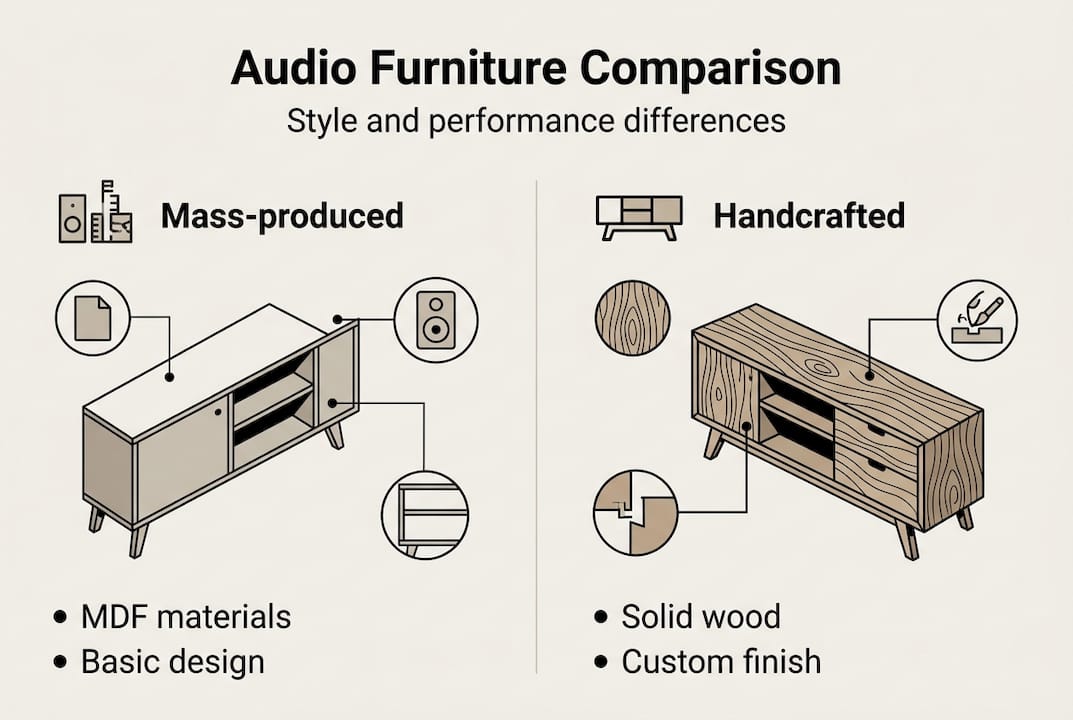
Comparison: mass-produced vs. handcrafted audio furniture
| Feature | Mass-produced shelf | Handcrafted audio rack |
|---|---|---|
| Material | MDF, particleboard | Solid hardwood (walnut, ash, oak) |
| Vibration control | None or incidental | Engineered (CLD, spikes, isolation) |
| Aesthetic finish | Generic, uniform | Unique grain, hand-finished |
| Longevity | 5 to 10 years | Decades with proper care |
| Audio performance | Degrades signal | Neutral to beneficial |
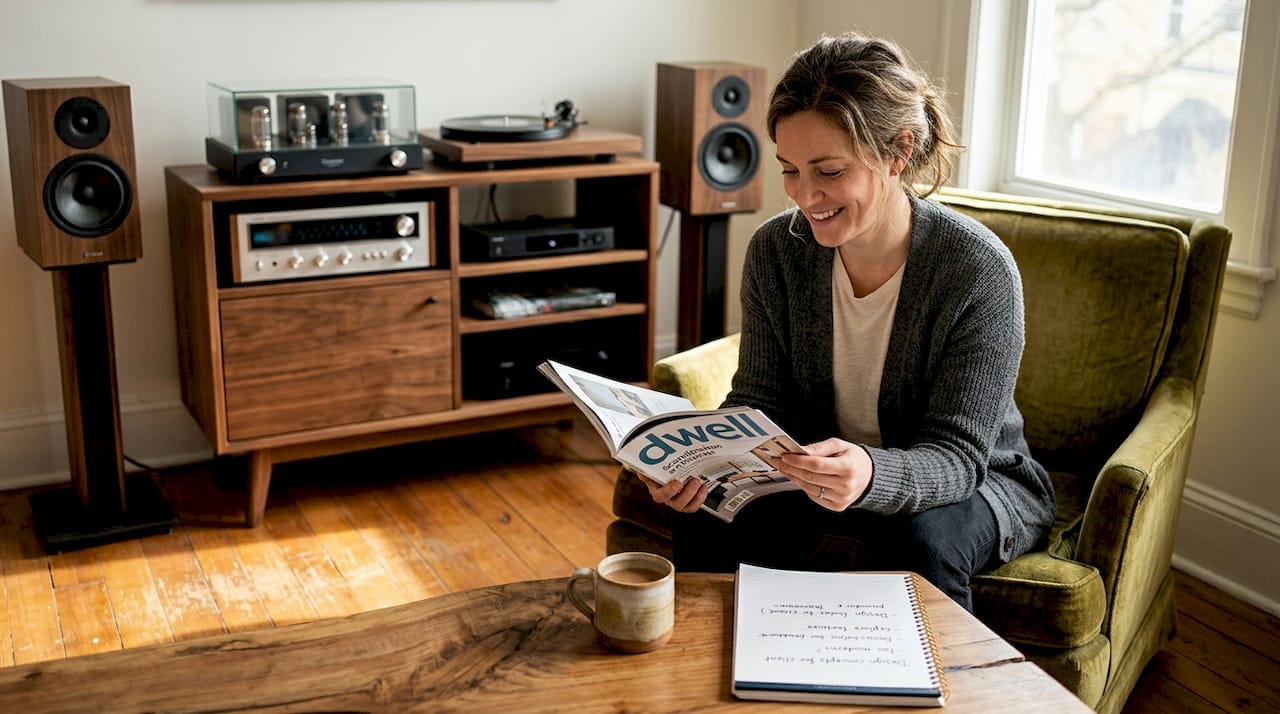
When you are creating premium listening spaces, the rack is the visual centerpiece of the room. It holds your gear, frames your speakers, and communicates to every visitor that this is a serious listening environment. The HiFi rack gallery shows just how different a room feels when the furniture matches the ambition of the components.
Common misconceptions and pitfalls
With real-world benefits established, it's important to navigate common misunderstandings and avoid costly mistakes.
The most damaging misconception is that furniture simply cannot affect sound. It is easy to understand why people believe this. Furniture looks passive. It sits there. But mass-produced furniture lacks rigidity and damping, leading to sympathetic vibrations that degrade the audio signal in ways that are subtle enough to miss on a casual listen but significant enough to undermine a high-resolution system entirely.
The second major pitfall is choosing isolation products without understanding their acoustic character. Some isolators, whether springs or elastomers, may color the sound in ways that are not always flattering. Springs can introduce a resonance of their own. Certain elastomers roll off high frequencies in ways you might not notice until you compare directly. Multi-layer approaches (rack plus platforms plus component feet) yield the best results because each layer addresses a different frequency range and mechanism of transmission, without any single layer imparting its own sonic signature.
Here are the most common mistakes audiophiles make with audio furniture:
- Choosing a rack based on looks alone, without checking shelf rigidity or material density
- Using a single isolation method and expecting it to handle all vibration types
- Placing a high-mass turntable on a lightly built shelf, creating a resonance point
- Ignoring floor type when selecting spike versus soft-foot solutions
- Buying decorative furniture with weak joints that flex under the weight of real components
We also see people gravitating toward overtly decorative racks with ornate metalwork or thin glass shelves. These look impressive but perform poorly. Glass transmits vibration efficiently. Thin metal brackets flex under load. Natural materials for HiFi racks like solid walnut and ash are not just aesthetically warmer. They are acoustically superior because of their internal cellular structure.
Pro Tip: Avoid any rack where the shelf deflects visibly when you press down on it with moderate hand pressure. That flex tells you exactly how it will behave under your amplifier.
How to select the ideal curated audio furniture
Avoiding pitfalls leaves you ready to make informed choices, so here's how to select the right curated furniture for your setup.
Start with your components. A turntable demands a more aggressive isolation approach than a solid-state amplifier. A tube amp with microphonic valves needs a rack that does not transmit any floor-borne energy at all. Know what you are protecting before you decide how to protect it.
Next, consider your room. A modern, minimalist space calls for clean lines and natural grain. A warmer, traditional listening room suits the rich tones of walnut or cherry. Curated furniture integrates seamlessly with home decor when the wood species and finish are chosen thoughtfully, rather than defaulting to whatever happens to be in stock at a generic furniture store.
Here is a practical evaluation checklist:
- Vibration control: Does the rack use spikes, CLD shelves, or isolation platforms? How many layers?
- Material quality: Is the wood solid hardwood or a veneer over MDF? Check the shelf edges.
- Load rating: Can each shelf safely support your heaviest component with a safety margin?
- Adjustability: Can shelf heights be changed as your system evolves?
- Finish quality: Are joints tight? Is the surface hand-finished or just sprayed?
- Aesthetic match: Does the grain and color complement your room and existing furniture?
Statistic callout: Subjective listening tests consistently show improvements in clarity, soundstage, and bass control when proper isolation furniture replaces mass-produced alternatives, with virtually every reviewer noting the change as immediately noticeable.
Choosing the right audio rack is a long-term investment, not a short-term purchase. The HiFi Rack blog covers specific wood species, isolation strategies, and real-system setups in depth if you want to go deeper on any of these points before committing.
Why conventional wisdom about audio furniture misses the mark
After exploring selection strategies, it's worth examining a deeper perspective that reshapes how we think about audio furniture.
Most audiophiles spend years chasing the last 5% of performance through cable upgrades, component swaps, and room treatment, while their rack remains the one variable they have never seriously addressed. We find this pattern consistently, and it is genuinely frustrating, because the rack is often responsible for more sonic degradation than the cable ever was.
Conventional wisdom says: buy the best components you can afford, then sort out the accessories later. We disagree. The rack is not an accessory. It is infrastructure. Placing a $5,000 turntable on an inadequate shelf is like running premium fuel through an engine with a cracked block.
The nuance that most guides miss is that multi-layer isolation approaches outperform single-method solutions not just in vibration reduction, but in neutrality. You want a rack that does nothing audible. The moment it introduces its own coloration, it becomes part of the problem.
Aesthetic harmony and sonic performance are not competing priorities. They are the same goal. When you invest in a handcrafted walnut rack that sits beautifully in your room and does its acoustic job perfectly, you are not making a compromise. You are building a premium listening space where every element earns its place.
Explore handcrafted HiFi racks for your home
If this article has made one thing clear, it's that the rack beneath your components is not a passive bystander. It is an active participant in your sound. We build our solid wood Hi-Fi racks from responsibly sourced hardwoods using four generations of woodworking craft, combining engineered isolation with the kind of natural beauty that makes a listening room feel complete.
Browse the Myro racks and stands collection to see how vibration control and visual refinement come together in a single, handcrafted object. If you want to see how our racks look in real-world listening rooms before committing, the rack design gallery shows finished setups across a range of spaces and styles. The right rack is out there for your system. Let us help you find it.
Frequently asked questions
How does curated audio furniture improve sound quality?
Curated audio furniture uses mass-loading, constrained layer damping, and isolation pads to decouple components from vibrations, directly improving clarity, soundstage depth, and bass control in ways that listener testing confirms consistently.
What makes curated furniture different from regular furniture?
Mass-produced furniture lacks rigidity and intentional damping, meaning it transmits sympathetic vibrations into your components, while curated audio racks are engineered from the ground up for inertness and decoupling.
Can curated racks really blend with my home decor?
Absolutely. Premium woods and finishes like hand-oiled walnut and brushed natural ash integrate with almost any interior style, making a handcrafted rack both a sonic and visual asset in your listening room.
Are all isolation methods equal in avoiding sound coloration?
Not at all. Some isolators color the sound in ways that affect tonal balance, which is why multi-layer approaches combining rack design, platforms, and component feet consistently outperform single-method solutions in neutrality and overall performance.